Ask a room full of BMW enthusiasts to pick the best sedan the company ever built, and the E39 comes up quickly. Ask which E39 to buy if the M5 is out of reach, and the answer is usually a 540i with a six-speed manual. The engine behind that answer is the M62, a 4.4-liter V8 that BMW built from 1995 to 2005 and put into the 5 Series, 7 Series, 8 Series, and the first X5.
The M62 replaced the M60 and grew displacement from 4.0 liters to 4.4. It was a simpler design than the N62 that followed it: no Valvetronic, no variable-length intake, and in its original form, no VANOS. That simplicity is much of the appeal today. The M62 is also the base for the S62, the V8 BMW M built for the E39 M5 and Z8, which says something about how good the foundation was.
It isn’t trouble-free. The M62’s weakness is its timing chain guides, and a neglected example can fail badly. But compared with the BMW V8s that came after it, the M62 is the one with the shortest list of expensive surprises.
Engine Overview

Every M62 is a 90-degree V8 with an aluminum block, aluminum cylinder heads, double overhead camshafts per bank, four valves per cylinder, and a single-row timing chain. It uses fracture-split forged connecting rods and hypereutectic pistons. Most blocks use Alusil bores, although some early engines used Nikasil coating. The original engine ran Bosch Motronic 5.2 management with a hot-wire mass airflow sensor.
In 1998, BMW introduced the M62TU (Technical Update), which added single VANOS on the intake camshafts, electronic throttle control, and Bosch Motronic ME7.2 engine management. Three production displacements were offered. The figures below are European ratings unless noted:
- M62B35 (3.5 liters): 173 kW (235 PS, 232 hp) at 5,700 rpm and 320 Nm (236 lb-ft) at 3,300 rpm. Bore x stroke: 84.0 x 78.9 mm. Redline: 6,200 rpm.
- M62TUB35 (3.5 liters): 180 kW (245 PS, 241 hp) at 5,800 rpm and 345 Nm (254 lb-ft) at 3,800 rpm in the 5 Series. The 7 Series version made 175 kW (235 hp).
- M62B44 (4.4 liters): 210 kW (286 PS, 282 hp) at 5,700 rpm and 420 Nm (310 lb-ft) at 3,900 rpm. Bore x stroke: 92.0 x 82.7 mm. Redline: 6,100 rpm.
- M62TUB44 (4.4 liters): 210 kW (282 hp) at 5,400 rpm and 440 Nm (325 lb-ft) at 3,600 rpm. US-market TU engines were later rated at 216 kW (290 hp).
- M62TUB46 (4.6 liters): 255 kW (347 PS, 342 hp) at 5,700 rpm and 480 Nm (354 lb-ft) at 3,700 rpm. Bore x stroke: 93.0 x 85.0 mm. Redline: 6,500 rpm.
The 4.6-liter engine was more than a bored and stroked 4.4. It got metal VANOS hubs, camshafts with 10.5 mm of lift, stronger valve springs, an underdriven crankshaft pulley, and shorter pistons to make room for the longer stroke.
Which Cars Use The M62?

The M62 went into the E39 5 Series, E38 7 Series, E31 8 Series, and E53 X5. It also found work outside BMW, most notably in the Range Rover built while Land Rover was under BMW ownership. Years below are production years, so US model years can differ slightly.
M62B35, 173 kW (232 hp):
- 1996-1998 E39 535i
- 1996-1998 E38 735i and 735iL
M62TUB35, 175-180 kW (235-241 hp):
- 1998-2001 E38 735i and 735iL (175 kW)
- 1998-2003 E39 535i (180 kW)
M62B44, 210 kW (282 hp):
- 1996-1998 E39 540i
- 1996-1998 E38 740i and 740iL
- 1997-1999 E31 840Ci
M62TUB44, 210-216 kW (282-290 hp):
- 1998-2003 E39 540i
- 1999-2001 E38 740i and 740iL
- 1999-2003 E53 X5 4.4i
- 2000-2004 Morgan Aero 8
- 2002-2005 Range Rover (L322)
M62TUB46, 255 kW (342 hp):
- 2002-2004 E53 X5 4.6is
- 2000-2004 Morgan Aero 8 GTN
- 1999-2001 ALPINA B10 V8
ALPINA’s own M62-based engines:
- F3 (4.6 liters), 250 kW (335 hp): 1996-1998 ALPINA B10 V8
- F4 (4.6 liters), 255 kW (342 hp): 1998-2000 ALPINA B10 V8 and, as the F4/1, the 2000-2002 B10 V8/1
- F5 (4.8 liters), 276 kW (370 hp): 2002-2004 ALPINA B10 V8S and 2002-2003 ALPINA Roadster V8
Other M62-based engines:
- 1998-2000 Bentley Arnage Green Label: a Cosworth-developed twin-turbo M62B44 making 260 kW (349 hp) and 569 Nm (420 lb-ft)
- 1999-2001 Racing Dynamics R52 Sport: a 5.2-liter conversion making 306 kW (410 hp) with a 7,200-rpm redline
For US shoppers, the M62 means the E39 540i sedan and Sport Wagon, the E38 740i and 740iL, the 840Ci, and the X5 4.4i and 4.6is. The 3.5-liter engines were never sold in the US.
The S62 Connection

The S62 is BMW M’s version of the M62, but it shares far less with the standard engine than the name suggests. It displaces 4,941 cc with a 94.0 x 89.0 mm bore and stroke, and makes 294 kW (400 PS, 394 hp) at 6,600 rpm and 500 Nm (369 lb-ft) at 3,800 rpm, with a 7,000-rpm redline. It was BMW’s first V8 with double VANOS, and it added individual throttle bodies, an 11.0:1 compression ratio (compared with 10.0:1 for the M62), a double-row timing chain, hollow camshafts, a Siemens MSS 52 engine computer, and a semi-dry-sump oiling system.
The S62 powered the 1998-2003 E39 M5 and 2000-2003 Z8, along with the Ascari KZ1 and A10. It deserves a guide of its own. For this one, the relevant point is that the M62 block and architecture could support nearly 400 hp in factory form.
Design And Technology
Compared with the M60, the M62 grew in displacement and moved from a double-row to a single-row timing chain. The single-row chain saved weight and friction, but it put more of the job on plastic guide rails, and that decision defines the engine’s reputation today.
The M62TU was a sensible update. Single VANOS on the intake cams improved low- and mid-range torque, which is why the TU 4.4 makes 20 Nm more than the original despite the same peak power. Drive-by-wire throttle arrived with the new ME7.2 management. Nothing about the update added the kind of packaging complexity that later made the N62 expensive to service. The M62 does route coolant pipes through the valley under the intake, but it doesn’t have the N62’s alternator bracket or Valvetronic hardware.
Reliability
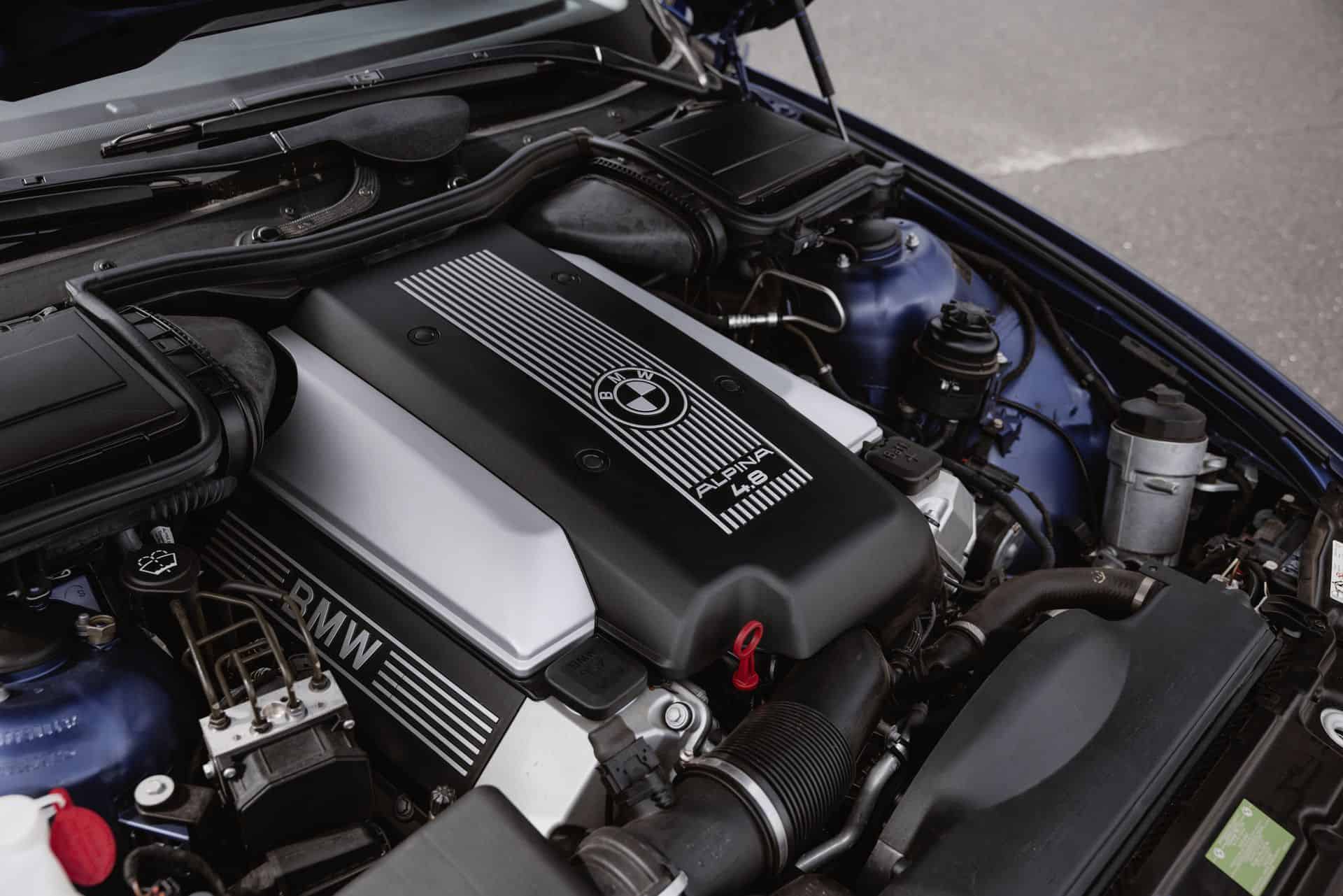
The timing chain guides are the M62’s best-known weakness, and on the TU engines in particular. The plastic upper guide rails get brittle with heat and age, crack, and eventually break apart. A worn chain tensioner speeds the process by letting the chain slap against the guides. The early warning is a rattle from the front of the engine, often worse on cold starts. Left alone, pieces of guide end up in the oil pan, the chain can jump teeth, and the engine can be damaged beyond economical repair.
Guide life varies widely. Common advice is to plan on replacement somewhere around 80,000 to 100,000 miles, although plenty of engines go well past that on the original parts. It’s a big job: the valve covers, upper timing covers, VANOS units, and valley pan all come off. If there’s no record that it’s been done on a high-mileage car, budget for it.
VANOS seals are the second common issue on M62TU engines. When they wear, the symptoms include rattling on a cold start, rough idle, hesitation, and a loss of power in the mid-range. The fix is usually new seals or a rebuilt VANOS unit rather than a new part, and rebuild services for M62 VANOS units are widely available.
Beyond that, the list is typical for a BMW of the era. Valve cover gaskets leak, sometimes into the spark plug wells. The rear main seal and timing cover gaskets can seep. The crankcase ventilation system and vacuum hoses harden and crack, which leads to vacuum leaks and rough running. The cooling system needs preventive attention: water pumps with plastic impellers, radiators, expansion tanks, and thermostats all wear out, and the coolant pipes and seals in the valley should be replaced whenever the intake is off.
Nikasil wear, which damaged many M60 engines in the 1990s when high-sulfur fuel ate the cylinder coating, affected only some early M62 blocks. BMW replaced many affected engines at the time, and the Alusil blocks used for most M62 production don’t have the problem. On an early car, a compression or leak-down test is still cheap insurance.
With the guides and cooling system handled, the M62 has a strong reputation for durability, and high-mileage examples are common. The owners who get there typically have receipts for timing chain guides at least once.
Efficiency
The M62 comes from an era when a V8 sedan meant a thirsty sedan. Under the EPA’s current methodology, the 2002 E39 540i is rated at 16 mpg city and 22 mpg highway with the automatic, and 14 mpg city and 21 mpg highway with the six-speed manual, on premium fuel. The 540i was subject to the federal Gas Guzzler Tax when new.
Highway cruising is where the M62 is most reasonable, since it turns relatively low revs in top gear. In traffic, expect the low teens or worse. The heavier E38 740i and E53 X5 4.4i do no better.
Tuning

As a naturally aspirated engine, the M62 responds to tuning in small steps. Dinan’s software for the 1999-2003 540i claims 9 hp and 11 lb-ft on its own, and its fullest package with supporting intake and hardware claims up to 30 hp and 27 lb-ft. That’s a noticeable improvement in throttle response and top-end pull, not a transformation.
Superchargers are the serious route. VF Engineering offered a bolt-on kit for the M62TU claiming 410 hp and 395 lb-ft, Dinan sold a Vortech-based system, and ESS kits exist but are rare. As with any older engine, fitting boost to a high-mileage M62 without addressing the timing chain guides first is asking for trouble.
The M62 is also a popular swap engine, particularly for the E30 3 Series. It’s compact for a V8, all aluminum, and inexpensive to source from donor E38s and E39s.
For factory-level extra performance, the X5 4.6is engine and the ALPINA versions show where the architecture goes with more displacement and better camshafts. Beyond that, an E39 M5 with the S62 is the logical endpoint.
Pros And Cons
The case for the M62 is that it’s the simplest modern BMW V8. It delivers strong low-end torque, a smooth, linear power delivery, and a 6,000-rpm-plus redline without Valvetronic, turbochargers, or direct injection. It came in some of BMW’s best-regarded cars, including the E39 540i, one of the few V8 BMW sedans offered with a six-speed manual. Parts are widely available, and the aftermarket knows the engine well.
The case against it is the timing chain guides, a repair that is both expensive and hard to ignore. Oil leaks, VANOS seals, and cooling system maintenance add to the running costs, and fuel economy is poor. Most surviving cars are now more than 20 years old, so condition and records outweigh mileage.
Is The M62 A Good Engine?
Yes, and it’s the easiest BMW V8 of its era to recommend. The M62 has one serious known weakness, and it’s a maintenance item that can be planned for. Its successor, the N62, added more technology and more expensive failure points, while the twin-turbo N63 after that is known for costly problems of its own. Next to them, the M62 looks like a piece of cake to work on.
If we were shopping, we’d look for a 1999-2003 540i with the M62TU and proof that the timing chain guides and tensioner have been replaced, preferably along with the valley coolant pipes and cooling system. A six-speed manual Sport model is the pick for enthusiasts. An E38 740i with the same records makes a strong case as a luxury cruiser. Without those receipts, factor the guide job into the purchase price.
FAQ
The M62 powered the E39 5 Series (535i, 540i), the E38 7 Series (735i, 740i and their long-wheelbase versions), the E31 840Ci, and the E53 X5 4.4i and 4.6is. It was also used in the Range Rover (L322), the Morgan Aero 8, and several ALPINA B10 models.
The plastic timing chain guides are the best-known weakness, especially on M62TU engines. They become brittle, crack, and can break apart, and a rattle from the front of the engine is the usual warning sign.
The M62TU arrived in 1998 and added single VANOS variable valve timing on the intake camshafts, electronic throttle control, and Bosch ME7.2 engine management. The TU 4.4 makes more torque than the original, although it adds VANOS seals to the maintenance list.
No. The S62 is based on the M62 but has its own 4.9-liter displacement, double VANOS, individual throttle bodies, a double-row timing chain, and a semi-dry-sump oil system. It makes 394 hp compared with 282 to 290 hp for the 4.4-liter M62.
Generally, yes. The M62 is a simpler engine without Valvetronic or the N62’s valley-mounted alternator bracket, and its main weakness, the timing chain guides, is a known maintenance item. The N62 has more expensive common failures, including valve stem seals.
First published by https://bit.ly/3sM6JoH
Comments
Post a Comment