When the E65 7 Series arrived in 2001, its styling took most of the heat. Under the hood sat something just as ambitious and far less discussed at the time: the N62, a clean-sheet 90-degree V8 that replaced the M62 and carried nearly every piece of engine technology BMW had. Valvetronic variable valve lift, double VANOS on both camshafts, and a continuously variable-length intake manifold that no other production engine has used. It won the overall International Engine of the Year title in 2002, plus Best New Engine and the Above 4-Liter category.
Today the N62 comes up mostly in conversations about valve stem seals, the alternator bracket gasket, and a coolant pipe buried in the engine valley. It also explains why a 545i, 650i, or 750Li can now be bought for the price of a used economy car, and why many of those cars are cheap for a reason.
BMW built the N62 from 2001 to 2010, by which point the twin-turbo N63 was already taking its place. Morgan kept using it until 2019. There was never an M version. What it did get was one of the longest application lists of any BMW V8, spanning four BMW model lines, two small-volume sports car makers, and ALPINA’s supercharged flagships.
Engine Overview

Every N62 uses an aluminum block and aluminum cylinder heads, double overhead camshafts per bank with four valves per cylinder, chain-driven cams, port fuel injection, and a 6,500-rpm redline. The 4.4-liter launch engine used offset, fracture-split forged powder-metal connecting rods. Four displacements were offered:
- N62B36 (3.6 liters): 200 kW (272 PS, 268 hp) at 6,200 rpm and 360 Nm (266 lb-ft). Bore x stroke: 84.0 x 81.2 mm.
- N62B40 (4.0 liters, N62TU): 225 kW (306 PS, 302 hp) at 6,300 rpm and 390 Nm (288 lb-ft) at 3,500 rpm. Bore x stroke: 87.0 x 84.1 mm.
- N62B44 (4.4 liters): 245 kW (333 PS) at 6,100 rpm and 450 Nm (332 lb-ft) at 3,600 rpm, rated at 325 hp in the US. A 235 kW (315 hp), 440 Nm (325 lb-ft) version went into the X5. Bore x stroke: 92.0 x 82.7 mm.
- N62B48 (4.8 liters): 270 kW (367 PS) at 6,300 rpm and 490 Nm (361 lb-ft) at 3,400 rpm, rated at 360 hp in the US. Lower-output versions made 261 kW (350 hp) and 265 kW (355 hp). Bore x stroke: 93.0 x 88.3 mm.
Which Cars Use The N62?

The N62 went into the E65/E66 7 Series, E60/E61 5 Series, E63/E64 6 Series, and both the E53 and E70 X5. Outside BMW, it powered Morgan’s Aero models and Wiesmann’s MF4, and ALPINA built its own supercharged version. Years below are production years, so US model years can differ slightly.
- N62B36, 200 kW (268 hp):
- 2001-2005 E65/E66 735i and 735Li
- N62B40, 225 kW (302 hp):
- 2005-2010 E60/E61 540i sedan and Touring
- 2005-2008 E65/E66 740i and 740Li
- N62B44, 245 kW (325 hp US):
- 2001-2005 E65/E66 745i and 745Li
- 2003-2005 E60/E61 545i
- 2003-2005 E63/E64 645Ci coupe and convertible
- 2005-2007 Morgan Aero 8 Series 2 and Series 3
- N62B44, 235 kW (315 hp):
- 2003-2006 E53 X5 4.4i
- N62B48, 270 kW (360 hp US):
- 2005-2010 E60/E61 550i sedan and Touring
- 2005-2010 E63/E64 650i coupe and convertible
- 2005-2008 E65/E66 750i and 750Li
- 2008-2010 Morgan Aero 8 Series 4 and Series 5, Aeromax, and Aero Coupe
- 2010-2015 Morgan Aero SuperSports
- N62B48, 265 kW (355 hp):
- 2004-2006 E53 X5 4.8is
- 2003-2011 Wiesmann GT MF4 and Roadster MF4
- N62B48, 261 kW (350 hp):
- 2007-2010 E70 X5 4.8i
- ALPINA H1 (supercharged N62B44), 368 kW (493 hp):
- 2003-2008 ALPINA B7 (E65)
- 2005-2007 ALPINA B5 (E60/E61)
- 2006-2007 ALPINA B6 (E63)
- ALPINA H1, 390 kW (523 hp):
- 2007-2010 ALPINA B5 S (E60/E61)
- 2007-2010 ALPINA B6 S (E63)
For US shoppers, the list is shorter: the 745i and 745Li, 545i, 645Ci, X5 4.4i and 4.8is with the older engines, then the 550i, 650i, 750i and 750Li, and E70 X5 4.8i with the 4.8-liter TU. The 3.6- and 4.0-liter engines were never sold in the US.
Design And Technology

The N62 was the first V8 with Valvetronic and only the second BMW engine to use it, after the N42 four-cylinder. The principle is the same. Instead of choking airflow with a throttle plate, an electric motor turns an eccentric shaft that changes how far the intake valves open, from nearly closed up to 9.85 mm of lift. On a V8, that means two eccentric shafts, two motors, and two sensors, one set per bank.
The N62 still has a throttle body, but it only does part-time work. It handles certain cold-start conditions, acts as a backup if Valvetronic fails, and holds a small amount of manifold vacuum at idle and light cruising so the crankcase ventilation and fuel evaporation systems can function. A separate vacuum pump on the cylinder head feeds the brake booster.
Double VANOS varies timing on both the intake and exhaust camshafts, a step up from the M62, which only adjusted the intake side.
The most unusual hardware on the 4.4-liter engine was its DIVA intake, a manifold whose runner length changed continuously rather than in the two fixed steps of BMW’s usual DISA system. The runners stayed at full length up to 3,500 rpm, then shortened progressively until redline, which widened the torque curve and helped peak output.
All of that hardware has to live somewhere, and on the N62 much of it sits in the valley between the cylinder banks under the intake manifold. That packaging decision is behind most of the engine’s reputation for expensive repairs. Many jobs that would be simple on an inline-six start with removing the intake.
The N62TU Update

For the 2006 model year in the US (2005 production), BMW introduced the N62TU. The 4.8-liter engine, first used in the X5 4.8is, replaced the 4.4 in the 5, 6, and 7 Series, and a new 4.0-liter replaced the 3.6 in Europe.
The TU changes went beyond displacement. BMW dropped the DIVA intake in favor of a conventional two-stage DISA manifold, deleted the secondary air injection system, and fitted new cylinder heads, exhaust manifolds, catalytic converters, pre-cat oxygen sensors, and a new mass airflow sensor with updated engine software. Valve stem diameter also shrank from 6 mm to 5 mm. Separately, a deeper oil pan introduced for the longer-stroke 4.8 was applied to all N62 production from October 2003.
For a used buyer, losing the secondary air system is the most practical gain. It was a known failure point on the 4.4-liter engines, and the TU cars simply don’t have it.
Reliability
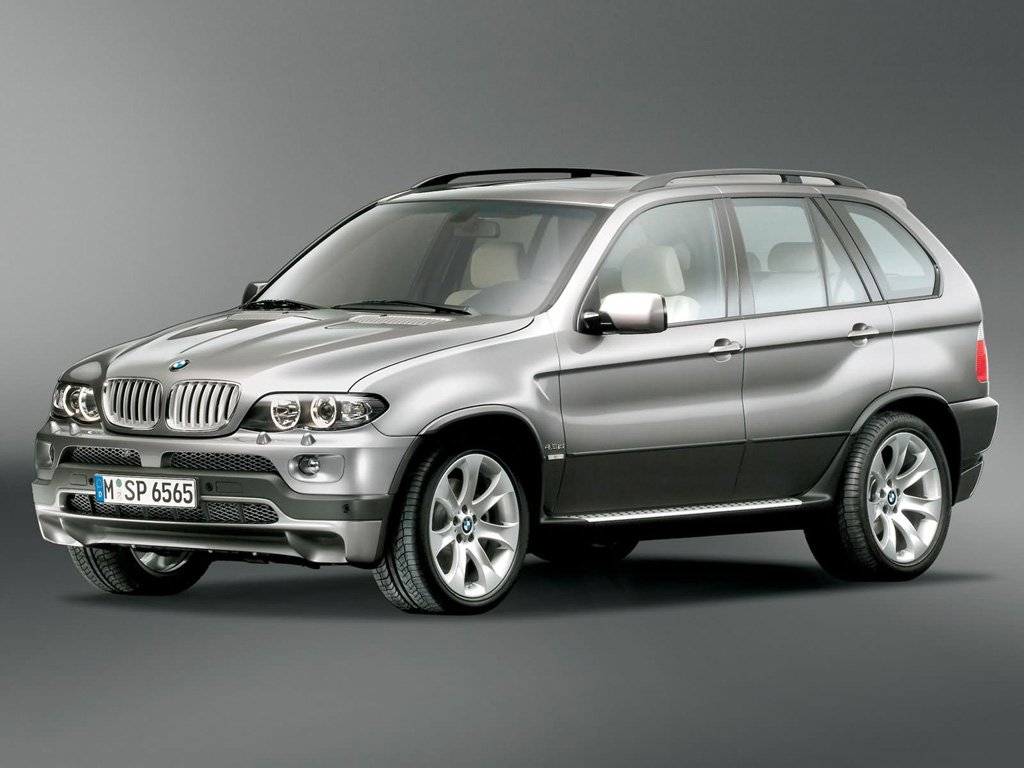
The N62’s problems are well documented, and the most famous one is the valve stem seals. As they harden with heat and age, oil seeps past the valve guides into the combustion chambers. The classic symptom is a puff of blue smoke after the car idles for a while, at a stoplight or on startup after sitting, along with steadily rising oil consumption. Worn valve guides often come along with it.
Replacing the seals doesn’t require pulling the heads if the shop uses a dedicated in-car spring compressor tool, but it is still a long job, and independent shops commonly quote in the thousands.
The alternator bracket gasket is the second headline issue. The bracket carries oil passages, and its gasket turns brittle and leaks oil into the valley. The repair means removing the intake manifold, so labor dominates the bill. One owner report puts the independent-shop price around $1,500.
The coolant transfer pipe, also in the valley, has seals that fail with age and let coolant pool under the intake. Since the intake is already coming off for the alternator bracket, experienced shops tend to do both jobs at once, and often the valley pan and related seals as well.
Beyond those three, the list is long but more routine for a BMW of this era. Valve cover gaskets and upper timing cover gaskets leak. The plastic timing chain guides get brittle and should be inspected any time the upper timing covers are off. Ignition coils fail and cause misfires and rough idle. The crankcase ventilation valves clog. Valvetronic motors and eccentric shaft sensors can cause erratic running as they age. The cooling system, including the water pump, thermostat, radiator, and expansion tank, needs the usual preventive replacement. On the 4.4-liter engines, the secondary air system adds another likely fault.
The engine’s core isn’t where most N62 horror stories come from. The trouble is that it bundles several expensive, labor-heavy jobs that all tend to come due around the same age and mileage. A well-kept N62 can cover high mileage, but the owners who get there usually have receipts for seals, gaskets, and cooling parts. We’d shorten oil change intervals well below BMW’s original condition-based schedule, use oil to BMW’s spec, and treat any smoke at idle as a line item for the budget.
Efficiency
Valvetronic reduced pumping losses at part throttle, and BMW designed the N62 to use meaningfully less fuel than the M62 it replaced. In practice, the N62 is still a big naturally aspirated V8 in a heavy car. The 2008 E60 550i was rated by the EPA at 15 mpg city and 22 to 23 mpg highway, depending on transmission, on premium fuel.
Steady highway cruising is where the technology does its best work, since Valvetronic runs at low lift with little throttling. In city driving or with a heavy right foot, the fuel economy advantage over older V8s mostly goes away.
Tuning
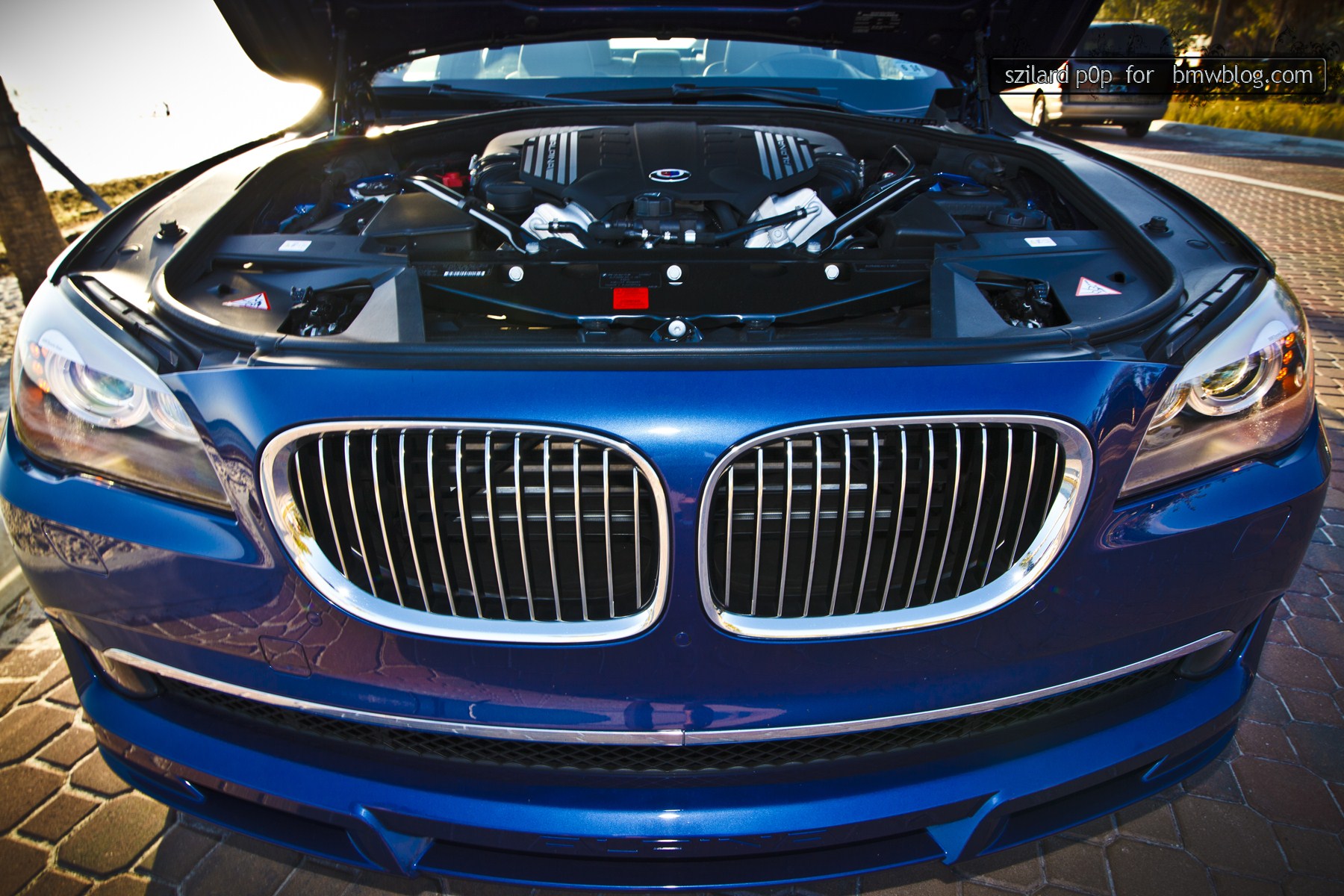
The N62 was never a tuner’s engine, and the aftermarket reflects that. ECU software from companies such as ESS and Dinan adds a modest amount of power on a stock engine. Owners who have tried it mostly report sharper throttle response rather than a big change in speed. Dinan claims 18 hp for its intake system, and headers are generally the most effective naturally aspirated bolt-on, but stacking all of them still leaves you well short of the 400-hp mark.
Real power means forced induction. ESS sold a supercharger system for the N62B48 running around 6 psi and claimed gains of about 120 hp. Those kits have been hard to find for years, although ESS has since listed a newer bolt-on system and refurbished kits. At this point, the price of a supercharger kit is comparable to that of a used N62 car.
The most telling example comes from ALPINA. Its H1 engine started with an N62B44 block and added a forged crankshaft, Mahle pistons, and a centrifugal supercharger, making up to 390 kW (523 hp) in the B5 S and B6 S. ALPINA didn’t trust the stock internals with boost, and neither would we. If you want a fast, tunable mid-2000s 5 Series, the N54-powered E60 535i is a much easier starting point.
Pros And Cons
The case for the N62 is simple. It is a naturally aspirated, all-aluminum V8 with a 6,500-rpm redline and linear response, in cars that now cost very little to buy. Its torque output made the 550i, 650i, and 750i genuinely quick in their day, and the TU engines dropped one of the original design’s weak points. For anyone who wants a V8 BMW without turbocharger complexity, it is one of the last options.
The case against it is equally simple. Its most common failures are expensive because of where they live, not because of the parts themselves. Valve stem seals, the alternator bracket gasket, and the coolant transfer pipe can together cost more than a tired example is worth. Fuel economy is poor by modern standards, tuning potential is limited, and a large share of the cars for sale today have deferred maintenance that the asking price doesn’t reflect.
Is The N62 A Good Engine?
As an engine design, yes. The N62 put Valvetronic on a V8 before anyone else, won major awards, and delivered the smooth, strong output a 7 Series needed.
As a used-car ownership prospect, it depends on the paperwork. An N62 with documented valve stem seals, a resealed valley, and a refreshed cooling system is a solid, characterful engine. One without those records is a repair estimate waiting for a car. If we were buying, we’d look for a TU car, a 550i, 650i, or 750i with the 4.8-liter engine, and budget for the big three jobs from day one unless the receipts proved they’d been done.
The N62’s reputation got worse once enthusiasts started comparing it with the
First published by https://bit.ly/3sM6JoH
Comments
Post a Comment